Opening · Act I
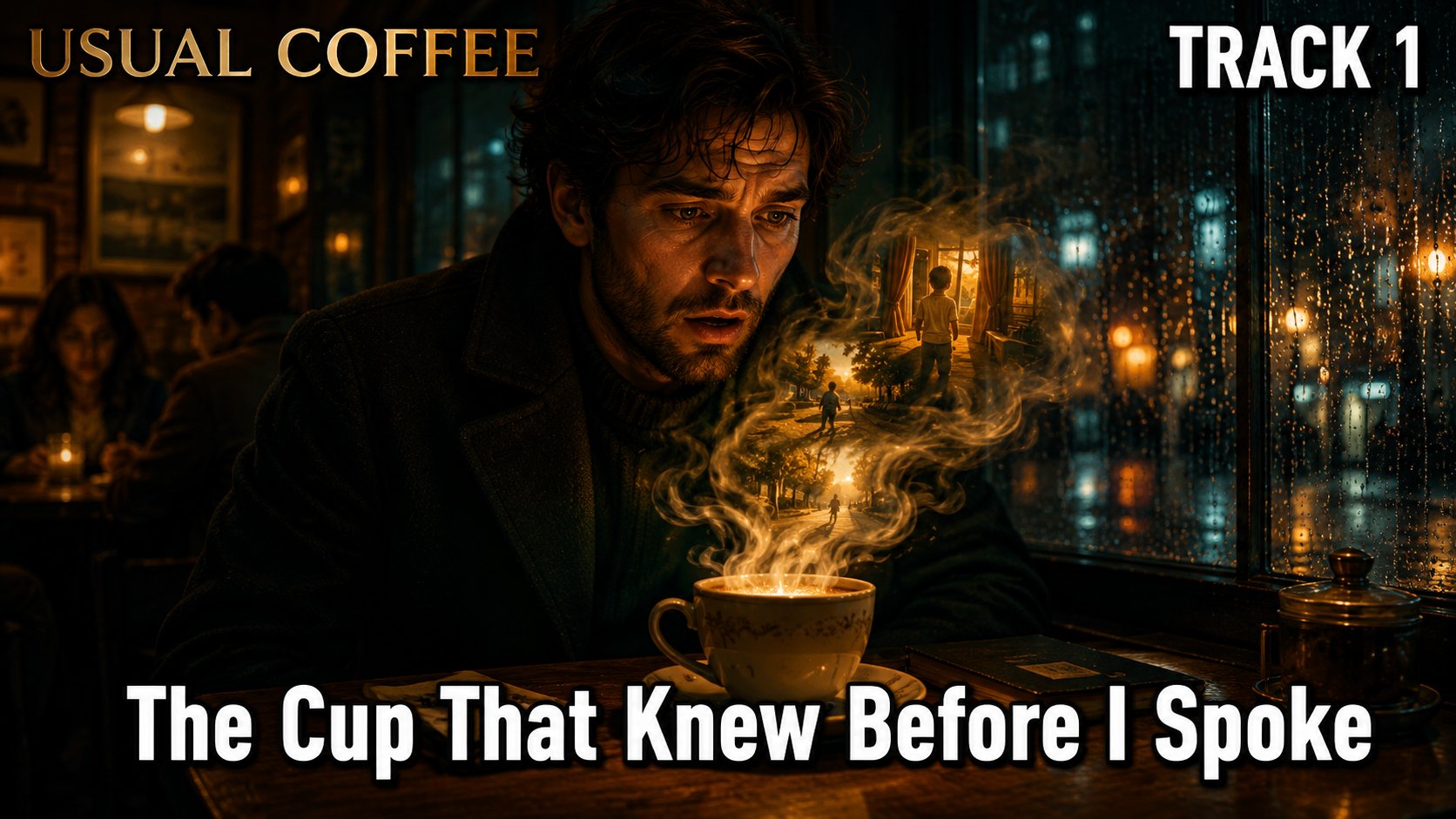
The Cup That Knew Before I Spoke
A newcomer receives coffee before ordering, and the first sip tastes like a forgotten childhood memory.
The café recognizes him before he speaks.
A Contemporary Chamber Jazz Opera of Memory, Honesty, and Impossible Coffee
A quiet café has no menu. The drinks arrive before they are ordered, tasting not like preference, but like memory, denial, confession, and the person one is becoming.
Usual Coffee unfolds inside a small, rain-lit café where every cup reveals something its drinker has avoided: a memory, a warning, a hidden connection, a refusal, an empty truth.
The café does not judge. It does not explain itself. It simply refuses to cooperate with performance. Its ordinary rituals — cups, steam, counters, chalkboards, saucers — become the operating system of emotional honesty.
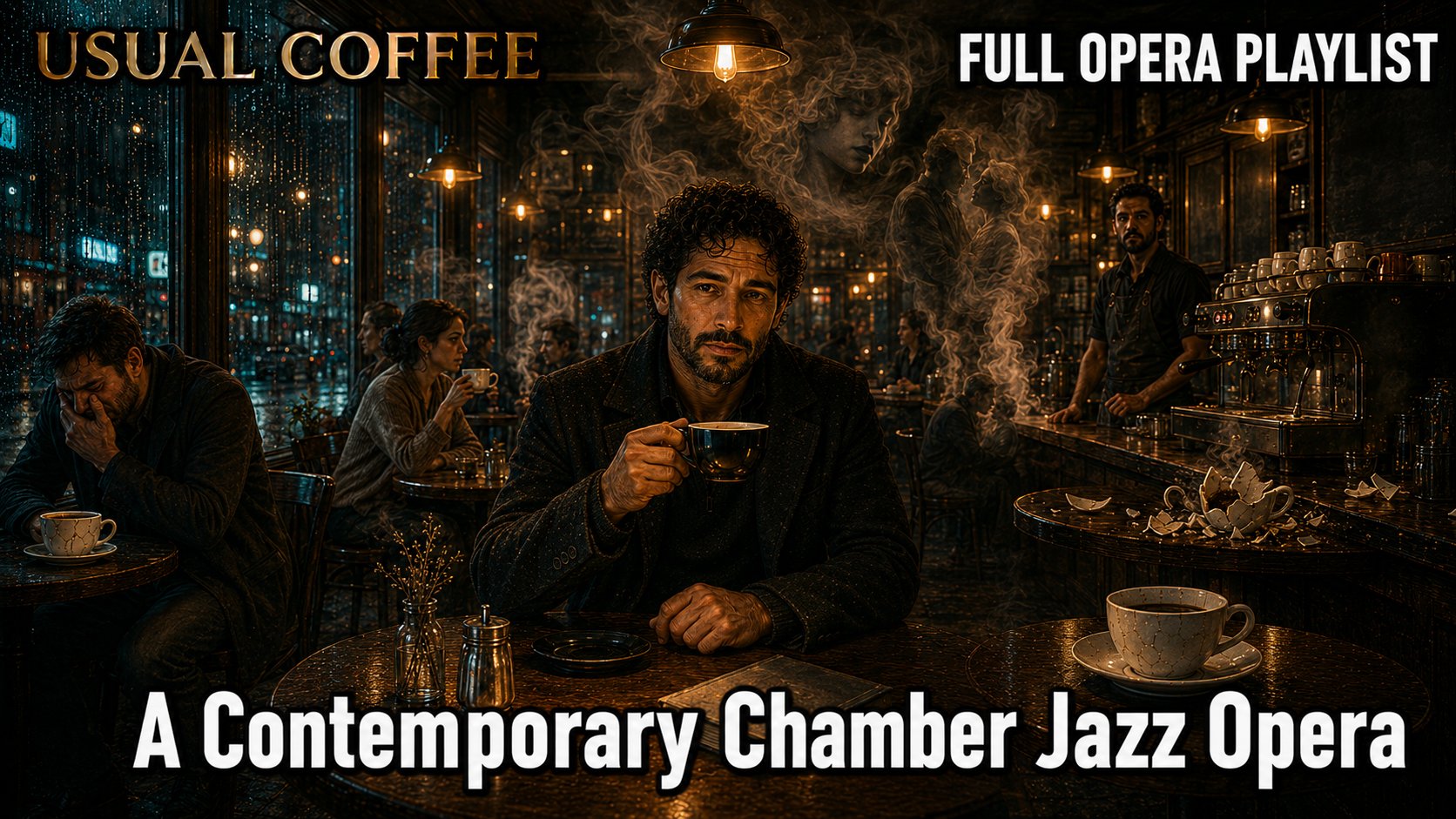
The complete contemporary chamber jazz opera — from the first impossible sip to the final cup that tastes not like habit, but like becoming.
The rarest drink contains nothing at all. No bitterness, no sweetness, no symbol — only the moment when analysis ends and choice begins.
The café's rules emerge through memory, bitterness, and sweetness that warns rather than comforts.
Matching cups, a drink that lies, the barista's secret, and a cup that refuses to leave.
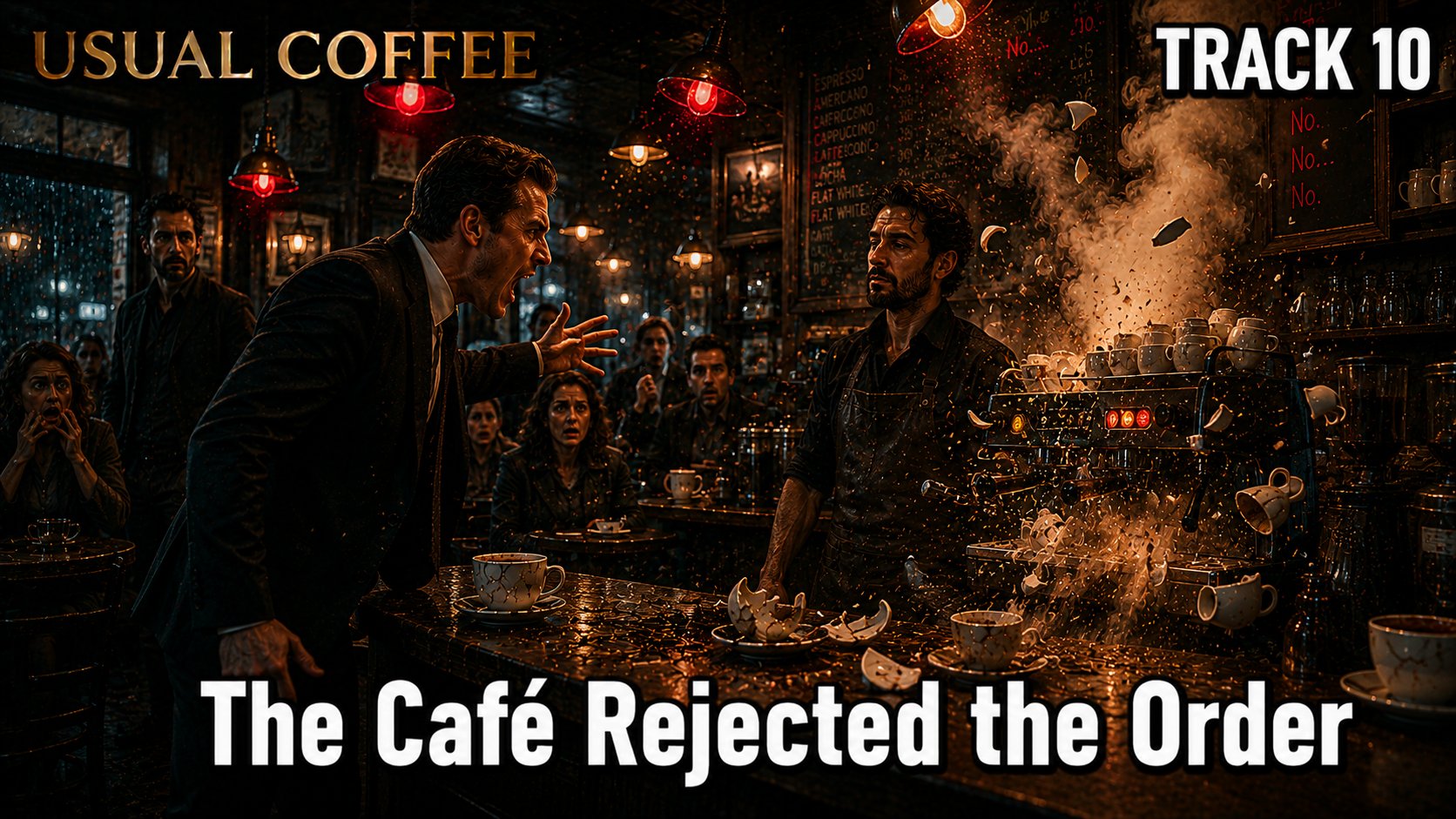
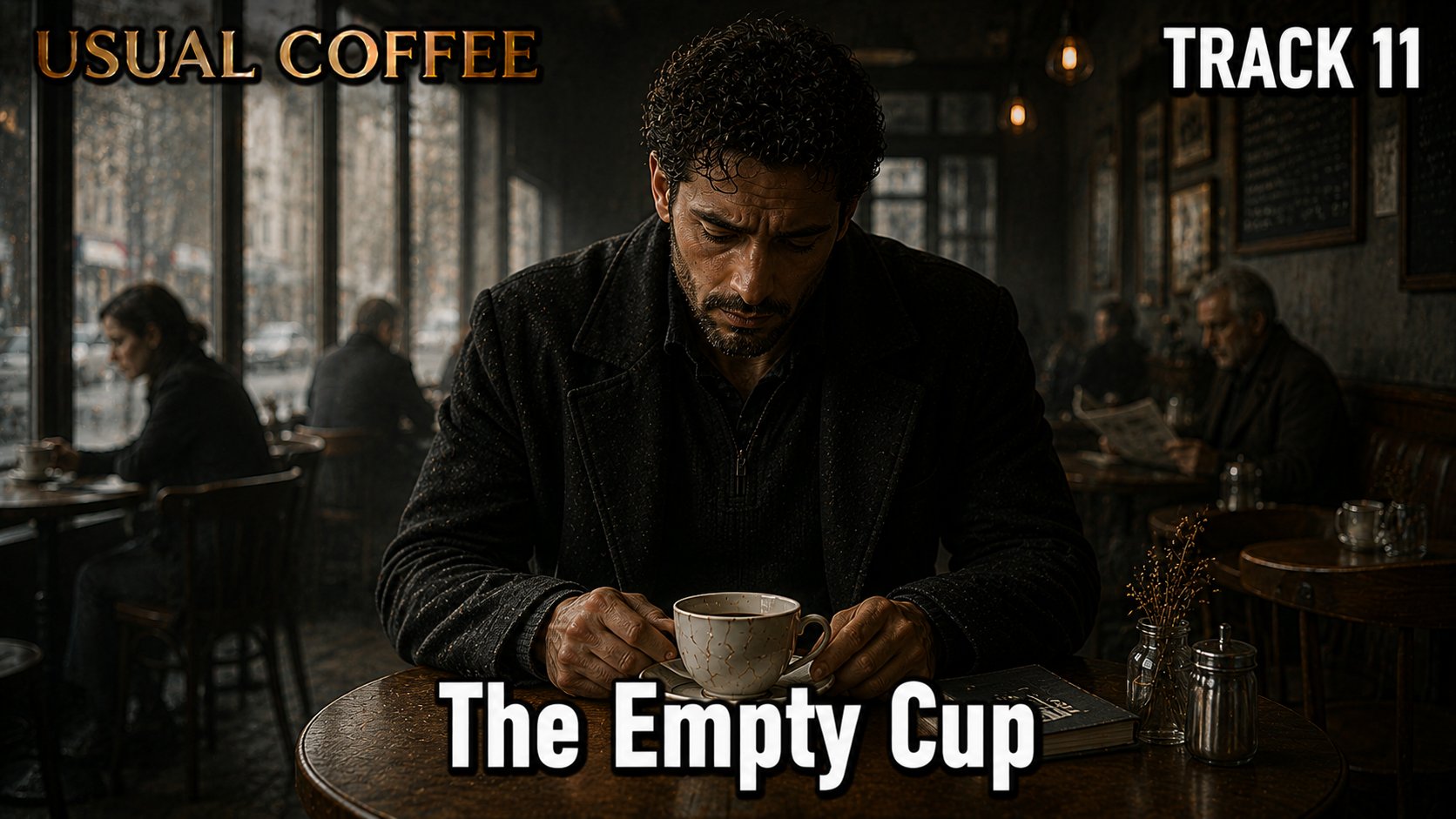
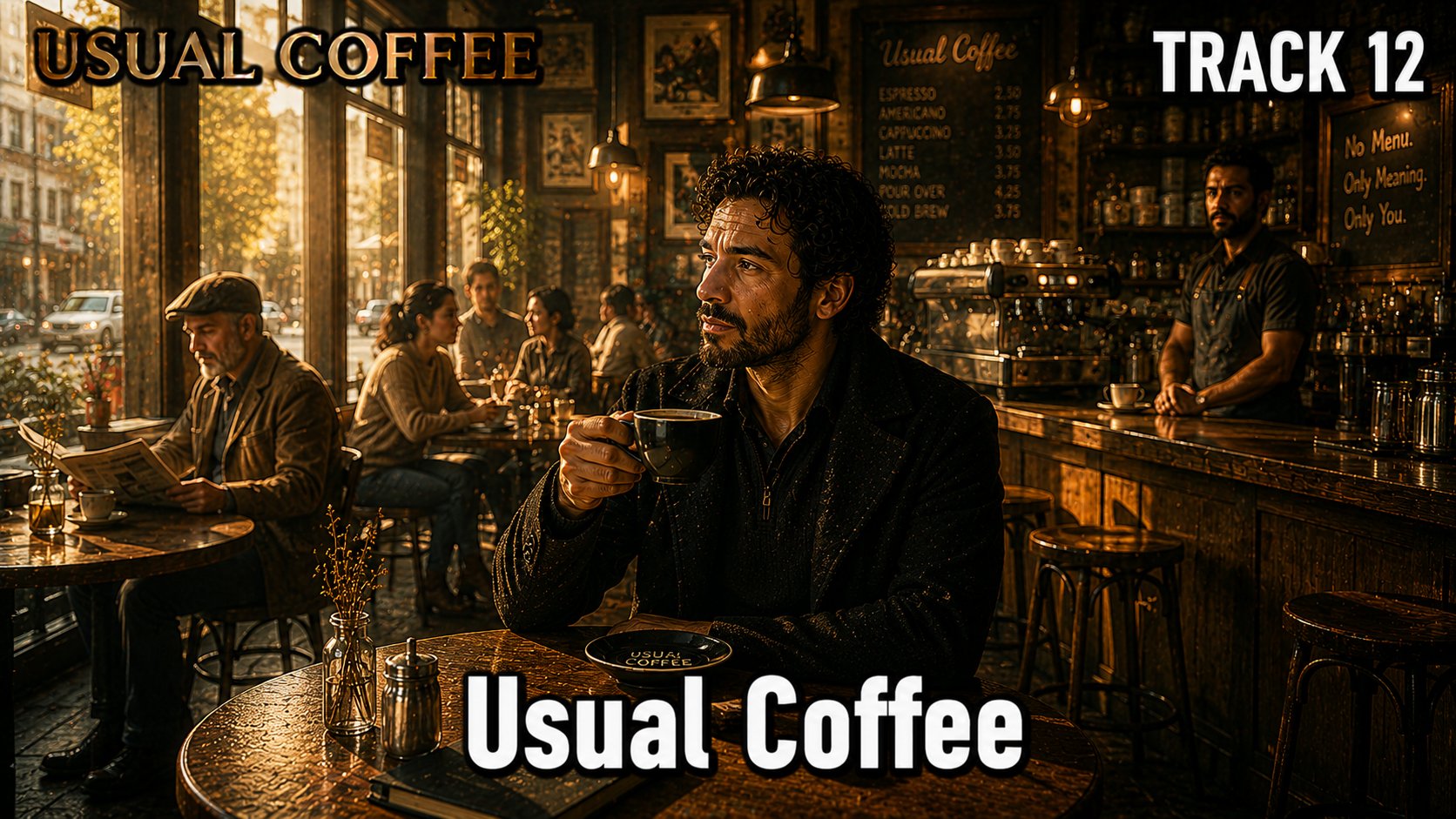
Confession changes flavor, authenticity rejects orders, emptiness arrives, and the usual becomes earned.
A newcomer receives coffee before ordering, and the first sip tastes like a forgotten childhood memory.
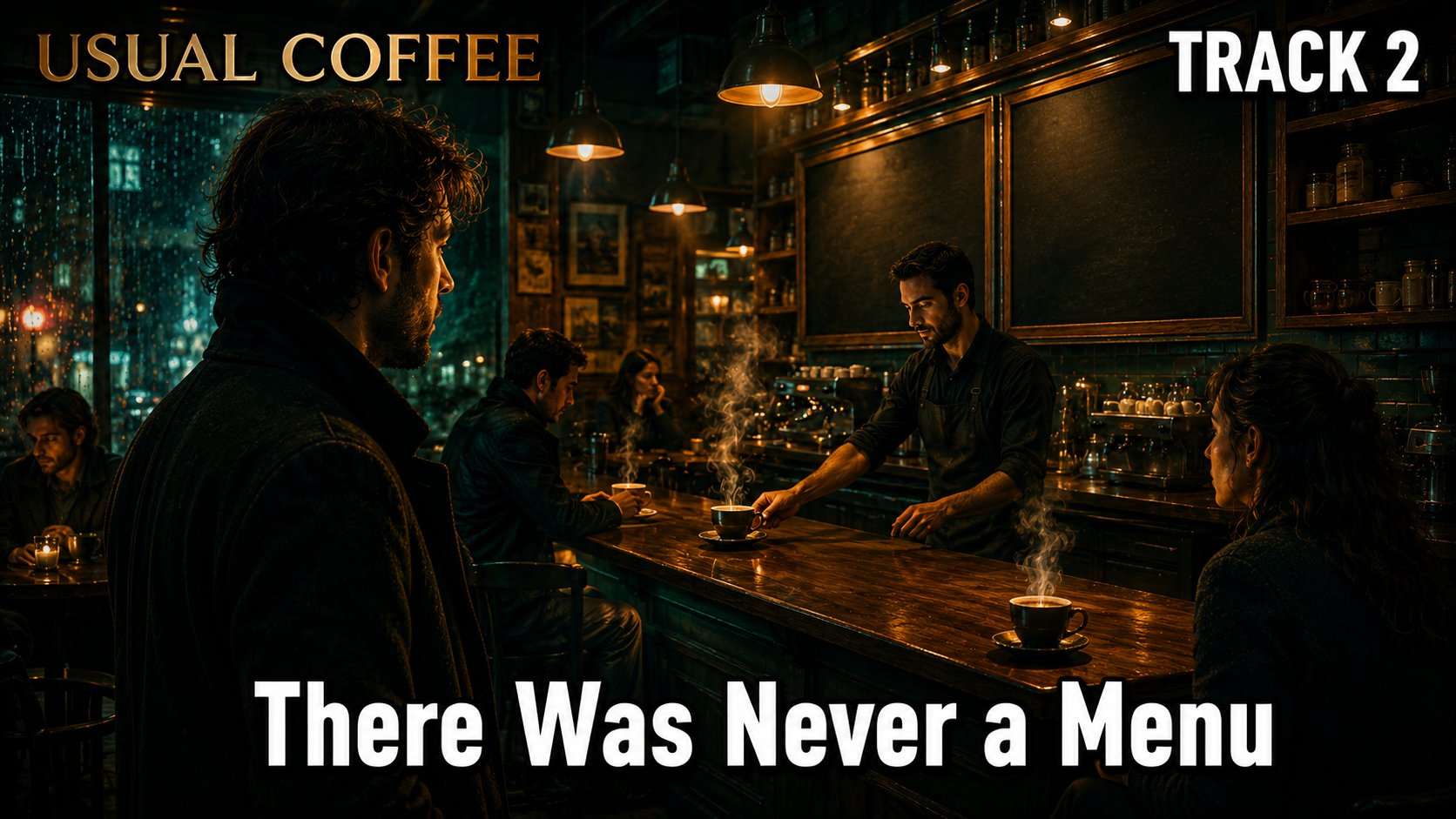
The protagonist discovers that drinks are not ordered; they appear according to the drinker's inner life.
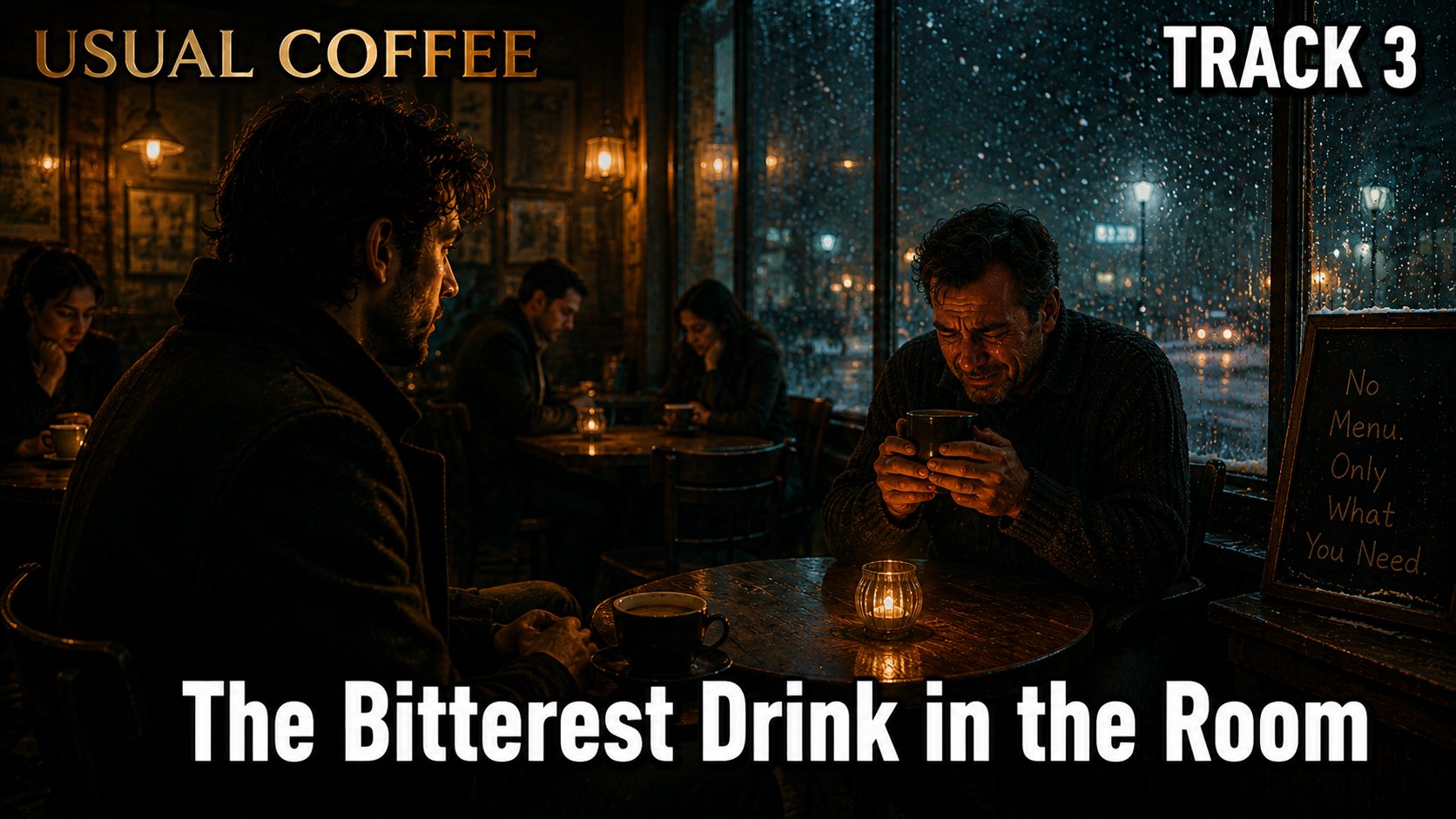
A regular receives a cup so bitter he breaks down quietly, revealing that the café clarifies pain rather than removing it.
An impossibly sweet drink becomes unbearable, exposing comfort as another way to remain unchanged.

A stranger receives the same drink, revealing a shared emotional pattern neither person understands yet.
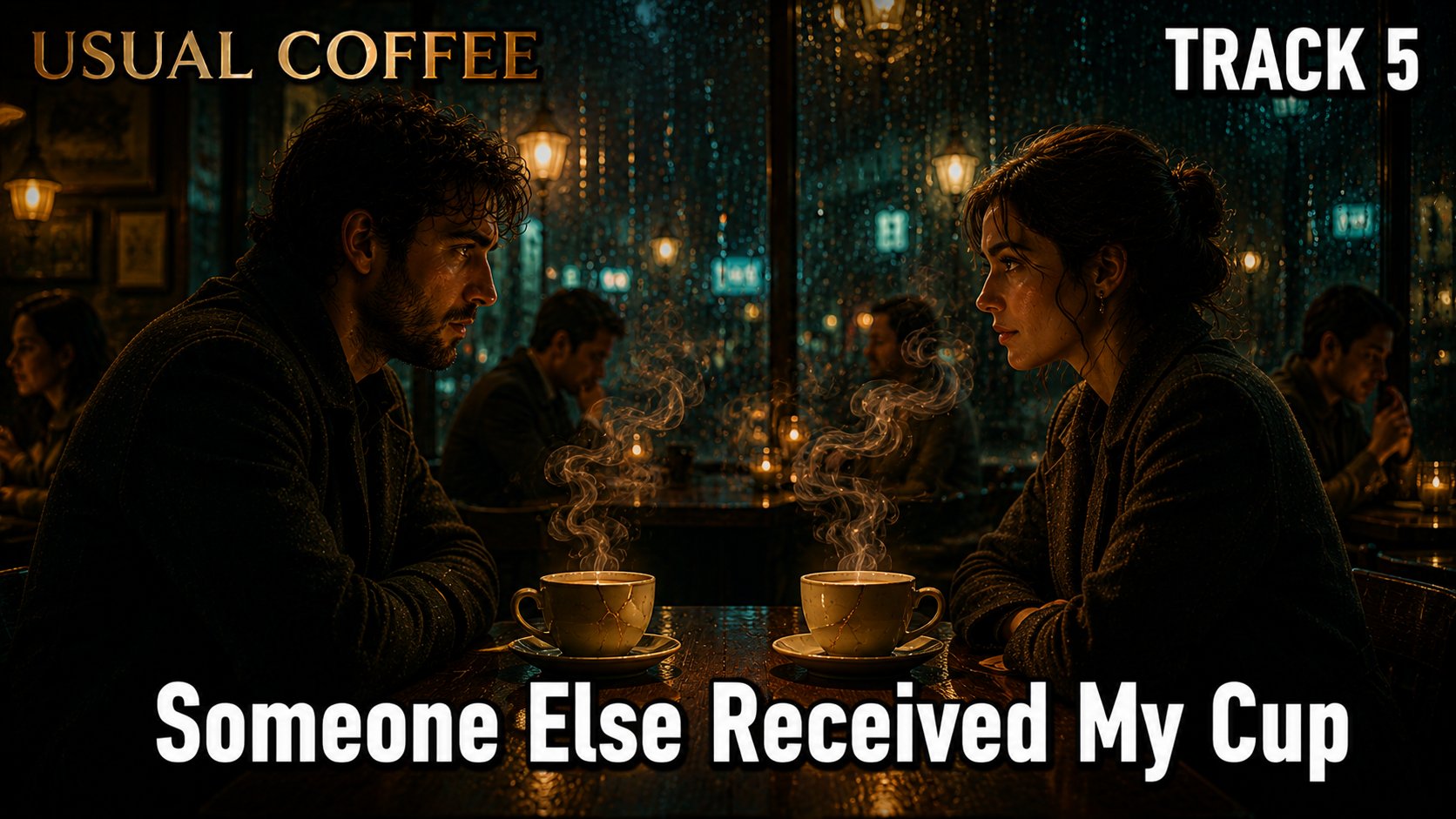
For the first time, a drink does not match its recipient, and the regulars panic because the café's accuracy has become their certainty.
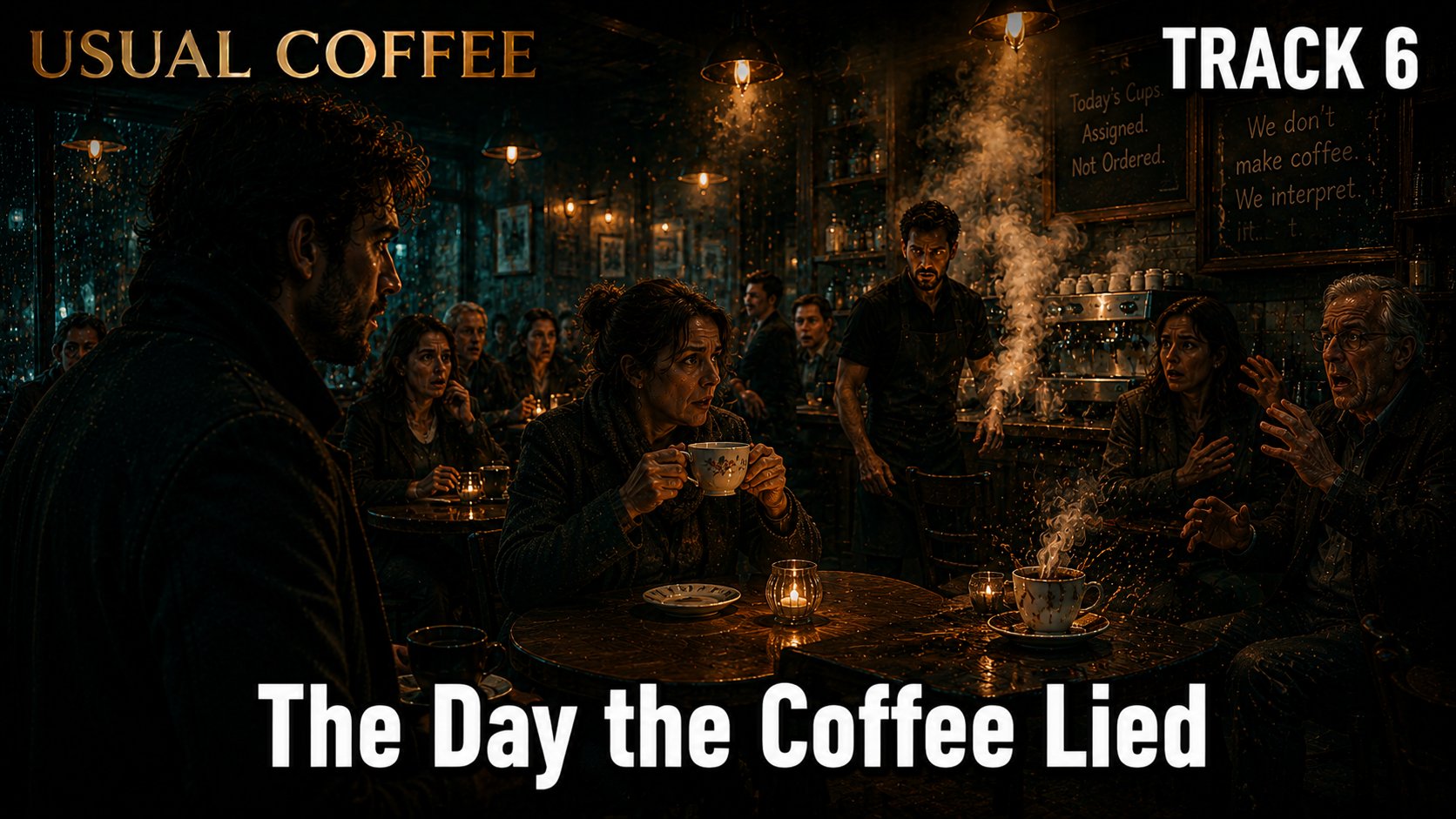
The barista reveals that he does not choose the drinks. He only carries what the café has already decided.
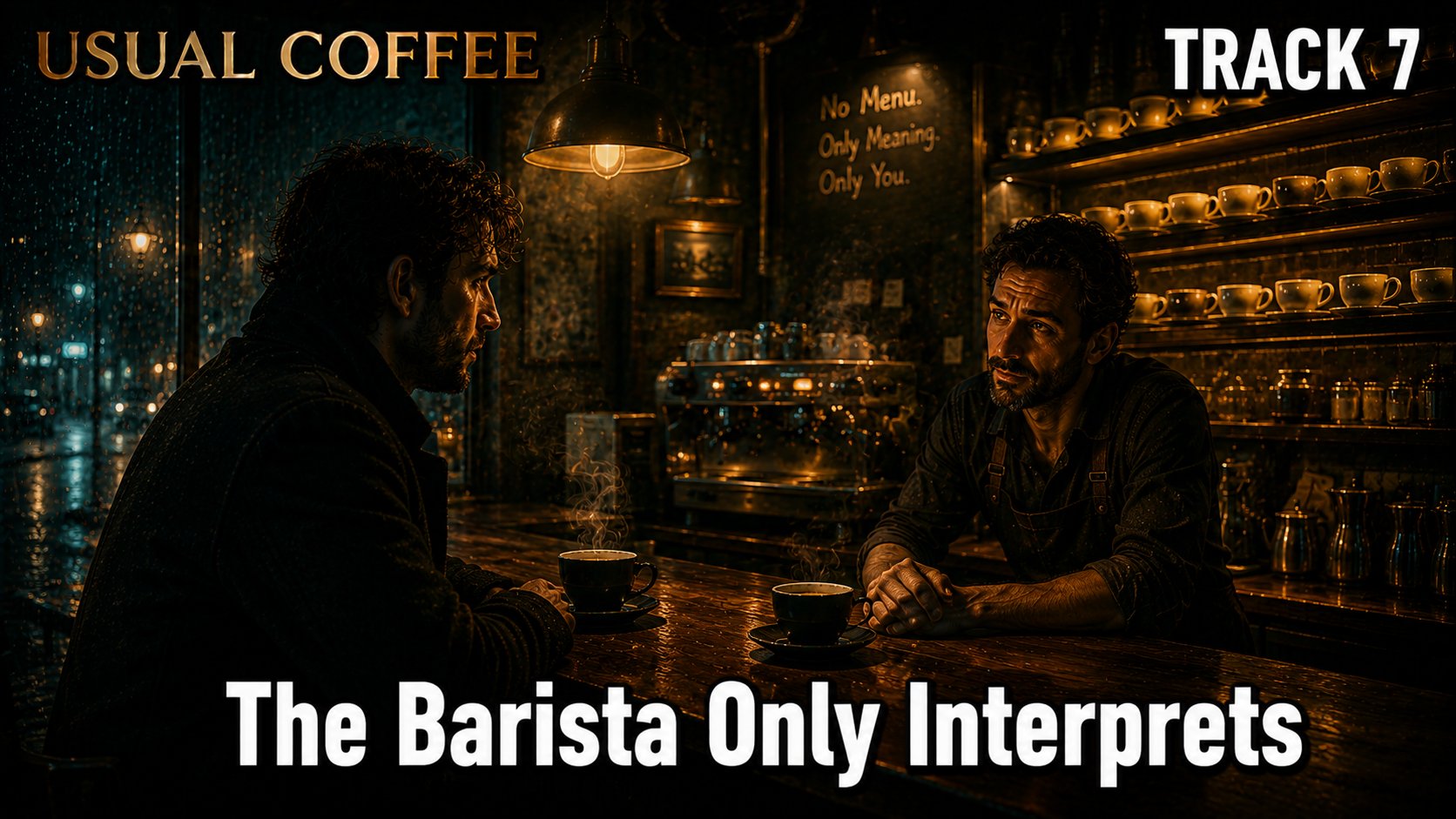
The protagonist rejects the drink, but the same cup keeps reappearing with calm procedural certainty.
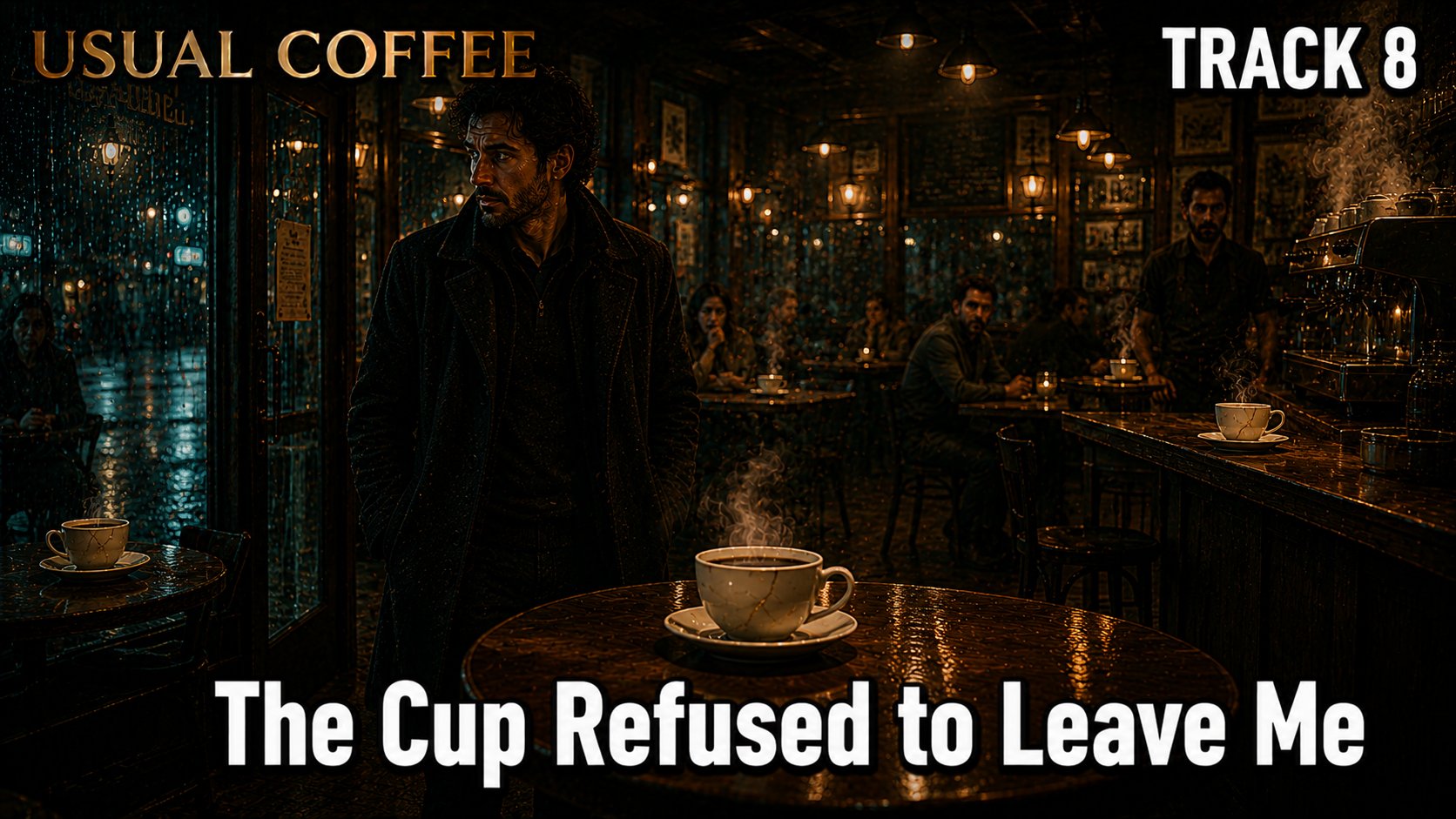
As the protagonist and the stranger speak truthfully, both drinks begin changing flavor in real time.
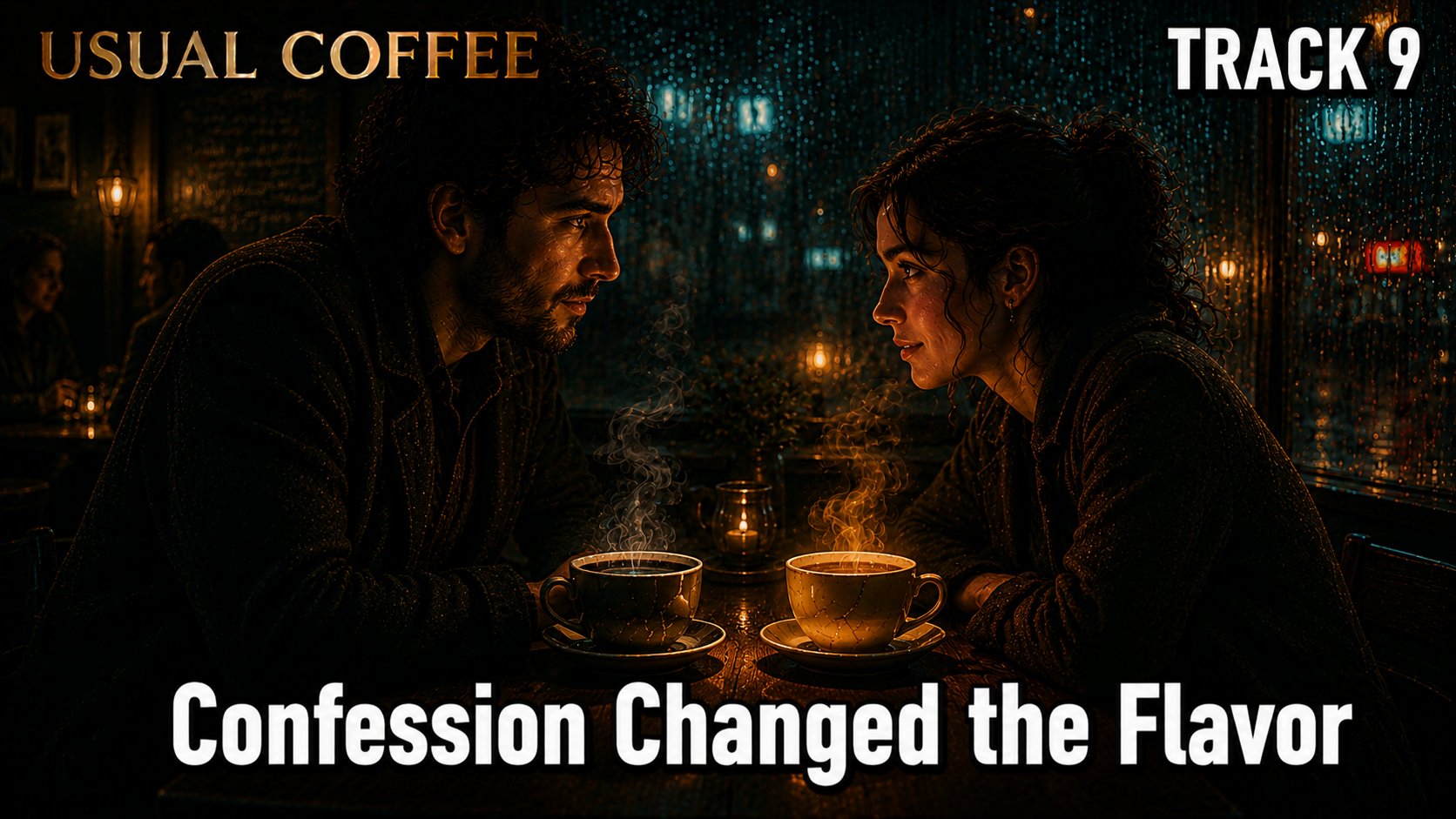
A customer tries to order directly, and the café reacts as though authenticity itself has been violated.
The protagonist receives a cup containing nothing, and the café's final lesson arrives without flavor, symbol, or performance.
At last, the protagonist receives a simple cup labeled Usual Coffee, and it tastes like becoming rather than habit.
No bitterness. No sweetness. No memory. No explanation. Only the rare moment when there is nothing left to analyze, and the person must choose.
The final cup does not taste like routine. It tastes like someone no longer hiding from their own life. Outside, morning continues. Inside, the café waits for whoever arrives next believing they only wanted coffee.